waxycap South Sound, WA · Olympic NF & NP

A field record from the Olympic Peninsula

Three waxycaps nobody had ever named.

Steve Ness spent a decade walking the Olympic National Forest and Olympic National Park — photographing waxycaps, sequencing them, and eating the good ones. With his friends from the South Sound Mushroom Club, he found three that don't appear in any field guide.

The backyard scientist

Steve Ness is a lifelong outdoorsman who trades weekends for the Olympic National Forest and Olympic National Park. A member of the South Sound Mushroom Club, he works a simple ritual with every waxycap he finds: photograph it in place, print its spores, sequence its DNA at home, and — once a second pair of club eyes agrees on the ID — taste it. Three of the mushrooms he's photographed over the past decade turned out to be species nobody had ever described.

The three discoveries

All three were found on club walks in Washington's forests and confirmed by DNA barcode — two are the subject of published research papers, the third is still being written up.

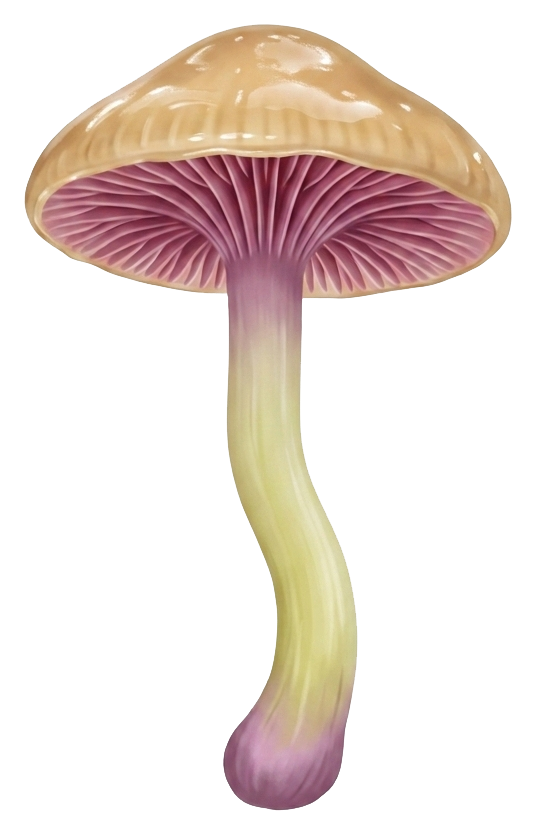
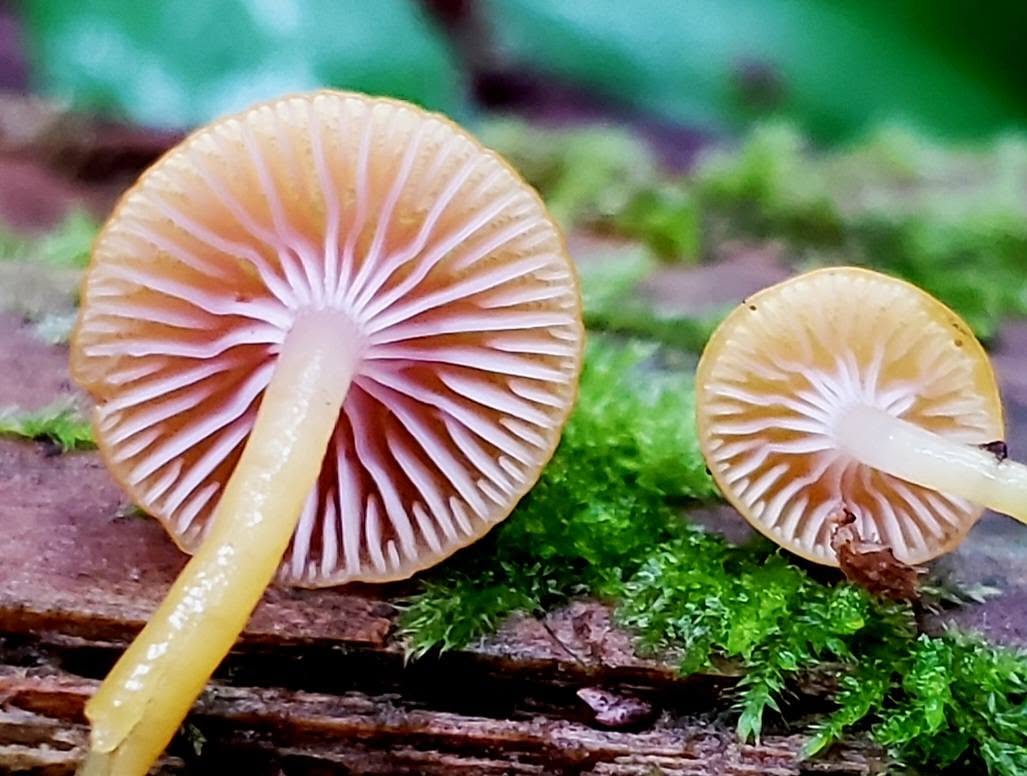
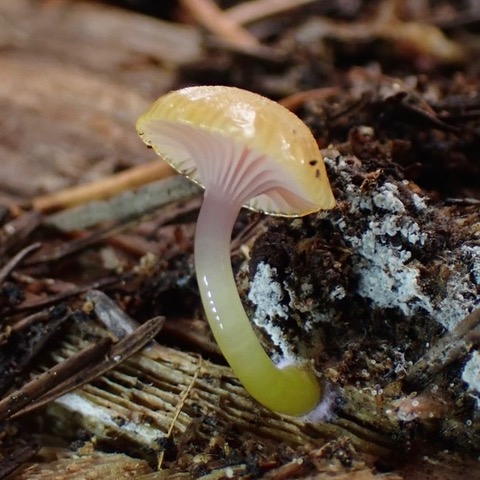
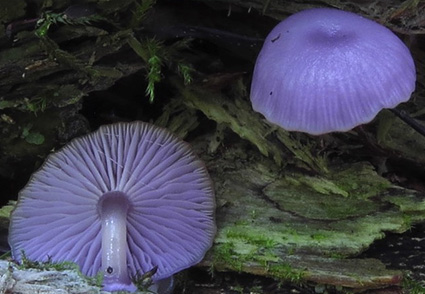
Chromosera loreleiae — a pale yellow waxycap with pink gills, near Mt Adams, WA (collected by Sadie Hickey, 2019) The pale purple waxycap specimen, cap and gill side
PLATE I · Lauren's turn, Mt Adams 2019
  • New species · 2025
  • Mt Adams · WA
  • Collected 2019
  • SSMC collection

Chromosera loreleiae

A new waxycap from the Pacific Northwest · Phytotaxa 690(1): 17–35, 2025

The mushroom world has been introduced to a new mushroom species name with some roots in the PNW and with a SSMC sequencing contribution. With a yell of excitement, Sadie Hickey from SSMC found this mushroom while attending the Key Council meeting near Mt Adams in 2019. The new name has just now been formally introduced, a name also with PNW connections. The mushroom was named in honor of Lorelei Norvell, an extremely well-respected mycologist who worked much of her career in the PNW. Lorelei Norvell was especially interested in Phaeocollybia and is author of Phaeocollybia of the Pacific Northwest North America. Lorelei's interest was very broad, though, and included work with Scott Redhead and Joe Ammirati on the Chromosera genus.

Lorelei and Sadie were both attending the Key Council when Sadie made the collection — and how appropriate that this absolutely gorgeous mushroom will now forever honor Lorelei's name. Unfortunately, Lorelei died in 2023, between the time Sadie collected the mushroom and before it gained species status. There was an obvious excitement as we took turns getting a picture of the mushroom. The picture here is of Lauren taking her turn — you can see the determination and dedication to get a quality picture. Lauren Ré, Sadie, and an old carpenter on Little Skookum — all members of SSMC — are listed as authors on the just-released species paper. Congratulations are in order to Sadie for being a top-notch collector.
Collector Sadie Hickey · 2019 Type locality near Mt Adams, WA Honoring Lorelei Norvell (†2023)
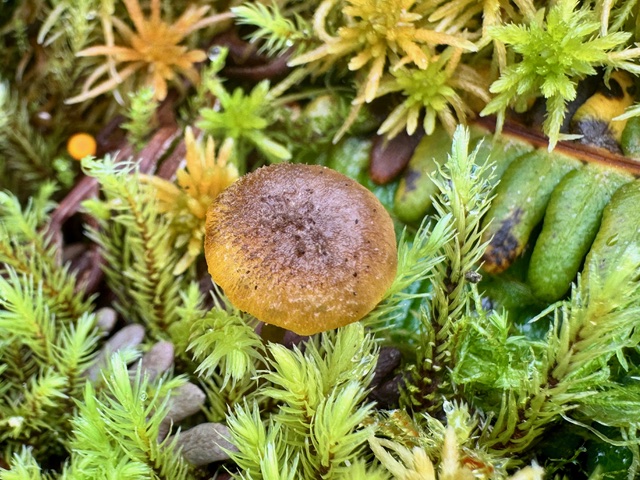
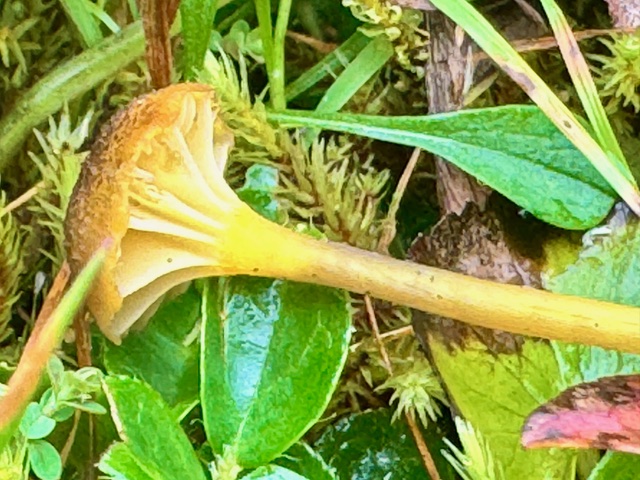
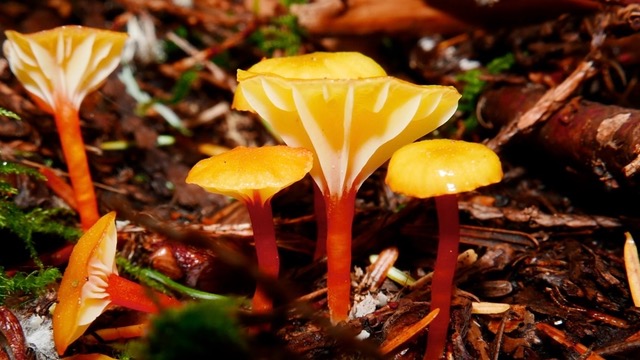
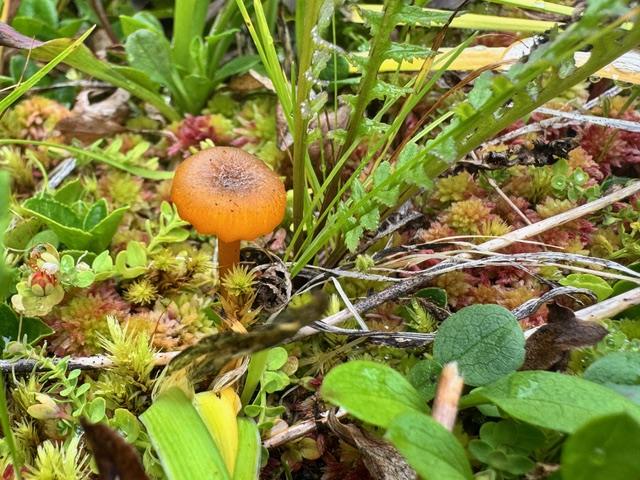
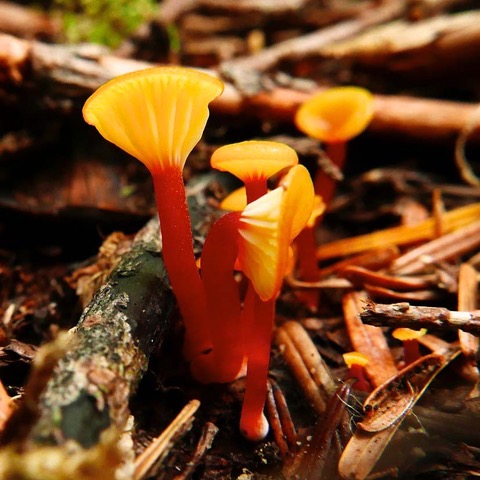
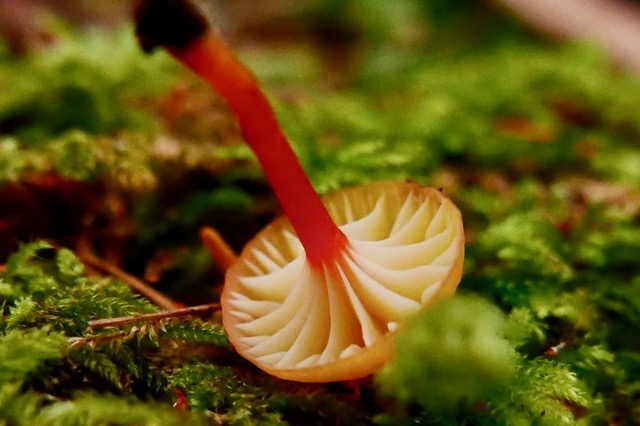
Hygrocybe aff cf minutula (PNW15) — orange-yellow caps and red stems, clustered among conifer duff Hygrocybe aff cf minutula (PNW15) — a single specimen, cap turned to show the gills, on moss
PLATE II · fresh specimen
  • “Opposite” · red stem, yellow cap
  • Olympic NF · WA
  • Collected 2019
  • Ness collection

Hygrocybe sp. ‘PNW15’ — The Wonder Mountain Waxcap

An unnamed waxcap from a hidden corner of the Olympics

Deep in the Olympic Mountains, along an elk trail that only opens up once the animals churn through on their way out of McKay Basin, there’s a tiny mushroom that’s been seen just twice in ten years. It grows in a single remote patch near an ancient old-growth cedar, in a stretch of forest so untouched the Forest Service set it aside as the Monarch Tree Grove. Getting there means driving a rough, often-closed logging road past Lake Cushman and into the headwaters of Four Streams — and in 2025, that whole area came within reach of the Bear Gulch III fire before the flames mysteriously slowed and stopped just short of it. The road, though, was destroyed in the process, and it’s unclear if this hidden mushroom patch will ever be reachable again.

Nicknamed “opposite” for its color scheme — a bright red stem topped by a yellow cap, the reverse of most waxcaps — this little fungus stands out against its white, drooping gills. A sample was first collected and sequenced back in 2019, before scientists had a formal way to flag likely new species, and its DNA has since turned up only two close matches: one from China and one from a California collection that carries the provisional name Hygrocybe sp. ‘PNW15.’ All known vouchered specimens have now been passed along to Lauren Ré, a rising star in mushroom taxonomy, in hopes that detailed microscopy work will finally push this quietly spectacular little waxcap toward official species status.

Collected 2019 · Olympic Mountains Type locality Monarch Tree Grove, WA Specimens with Lauren Ré
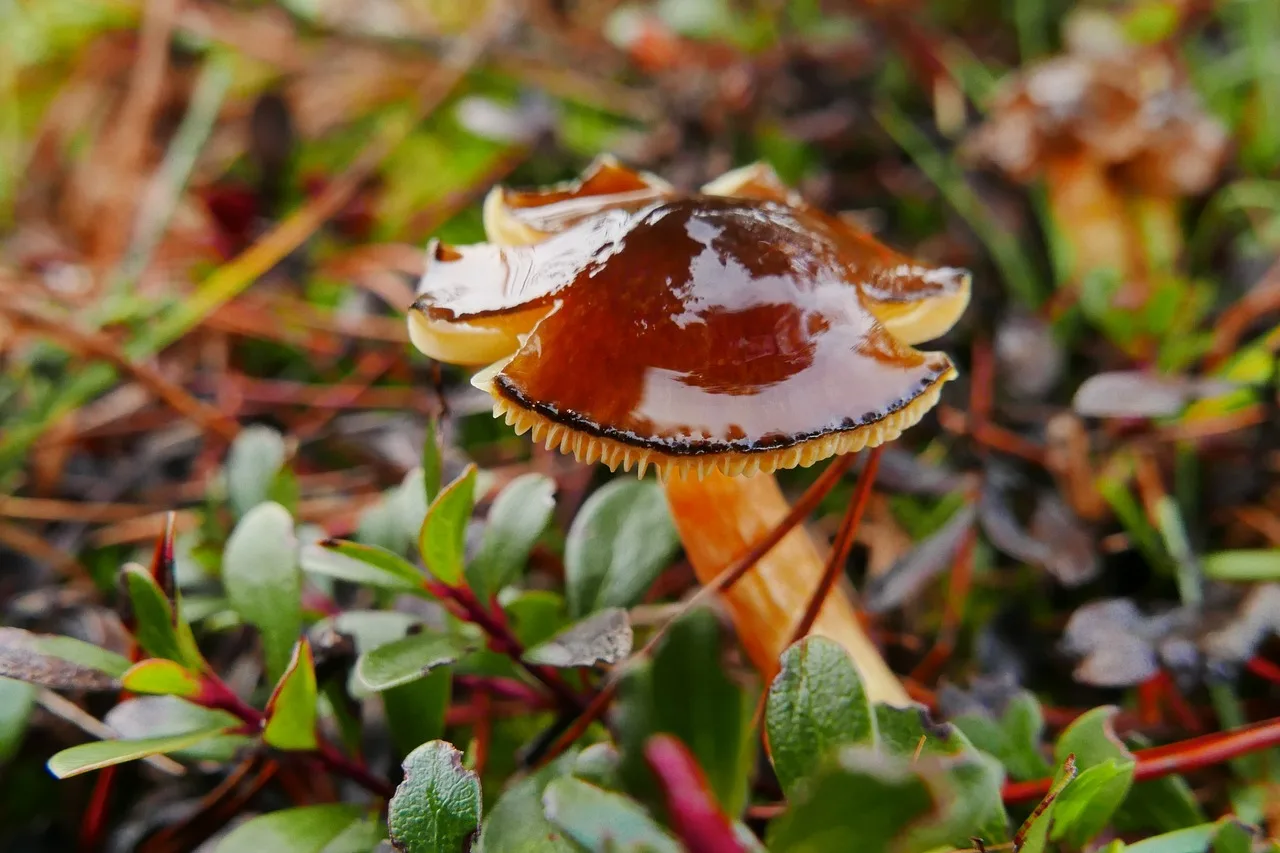
Hygrocybe sp. ‘conica-PNW28’ — cap view with a dark, sunken center, the photo used to represent the species on iNaturalist Hygrocybe sp. ‘conica-PNW28’ — the gills and stem, the underside view used to represent PNW28 in Danny's DNA Discoveries picture key
PLATE III · high country find
  • Undescribed · conica group
  • Mason Co · WA
  • Collected 2024
  • Ness collection

Hygrocybe sp. ‘conica-PNW28’ — The Oxen Camp Waxcap

Field notes from an unresolved corner of the Hygrocybe conica complex

A species name is a tidy box — a human convenience for filing away something that's actually far too complex to fully untangle. The DNA underneath doesn't always cooperate with the box, and the Hygrocybe conica complex is a good example of the mess that gets simplified away. The true H. conica logs over 16,000 observations on iNaturalist from every corner of the globe; its black-bruising Pacific Northwest look-alike, H. singeri, adds another 5,000. For years Steve and the club assumed Washington only grew H. singeri — until DNA started turning up specimens that blacken like H. singeri in the field but sequence closer to H. conica. Four provisional lineages are now on record: 'conica-PNW22' (11 iNat observations), 'conica-PNW25' (a single high-elevation find in Grays Harbor County), 'conica-PNW27' (one record from Whatcom County), and 'conica-PNW28' — three observations so far, including the specimen pictured here.

This specimen came from Oxen Camp, on Little Skookum Inlet in Mason County, likely named for where the first loggers corralled their oxen teams — a patch of moss under red cedar beside a salmon-bearing creek. It's the only 'conica-PNW28' vouchered with a GenBank sequence, and its closest BLAST match still sits at just 95.7% — the DNA itself won't settle cleanly into the 'conica' box. That gap is wide enough that Steve suspects the whole cluster may never resolve into clean species — more likely a set of varieties. Half-joking, he already has a name ready for this lineage: Hygrocybe conica var. castraboum, Latin for camp of the oxen.

Collector Steve Ness · 2024 Type locality Oxen Camp, Little Skookum Inlet, Mason Co., WA BLAST match 95.7% (nearest GenBank hit)

Where it grows

Three specimens, three corners of Washington — Chromosera loreleiae near Mount Adams, the unnamed 'PNW15' waxcap in a hidden grove in the Olympic Mountains, and 'conica-PNW28' at Oxen Camp on Little Skookum Inlet, Mason County. Each marker marks the first find.